Choosing Transportation That Fits Your Indonesian Travel Plans

October 16, 2026 · 10 reads
Introduction
Planning a journey across an archipelago as vast, culturally rich, and geographically diverse as Indonesia involves countless moving parts, from selecting accommodations and plotting out daily itineraries to budgeting for local excursions. Yet, one of the most consequential choices is often left until the very last minute: how you will actually move from place to place once your feet hit the ground. The transport mode you select dictates your travel time, daily flexibility, physical endurance, safety profile, and the kinds of remote destinations you can realistically reach. Rather than choosing a vehicle solely based on a low advertised price tag or general online popularity, savvy travelers benefit immensely from selecting transport that matches their actual itinerary, regional route conditions, and personal operating experience.
Match the Vehicle to the Trip
Every vehicle category serves a distinct operational purpose, and what works wonderfully for a short neighborhood errand may prove entirely unsuitable for a multi-hour cross-country journey across challenging terrain.
- Scooters and Mopeds: These light, automatic machines are frequently chosen for short local journeys where legally permitted and when the rider possesses appropriate experience. They offer exceptional fuel efficiency, nimble handling, and easy maneuverability through congested local lanes, making them an absolute staple of island exploration and short-distance transit.
- Standard Motorcycles: Suited for travelers who need more flexibility for longer regional journeys, depending on road conditions and their personal riding confidence. They provide greater torque, larger fuel capacities, and superior frame stability over sustained distances, allowing riders to maintain steady speeds on intercity paved highways.
- Adventure Motorcycles: Worth considering for suitable longer routes across rugged topography, provided the machine matches the road conditions and the rider’s advanced technical skills. These machines are engineered with robust long-travel suspensions, high ground clearance, and heavy-duty chassis to handle unpaved tracks, gravel paths, and mountainous elevation changes.
- Cars and Family Vehicles: Highly practical for families, groups, heavy luggage hauling, reliable weather protection against sudden tropical downpours, or travelers who prefer not to ride a two-wheeler. They offer secure storage and passenger comfort across extensive multi-destination itineraries.
Road conditions, local traffic patterns, prevailing weather systems, strict licensing rules, and regional restrictions should always influence your final decision. No single vehicle category is universally ideal for every traveler or every route.
Comprehensive Vehicle Comparison Framework
| Vehicle Type | Potentially Suitable Trip | Main Operating Consideration | Essential Pre-Rental Verification |
| Scooter | Short local journeys and neighborhood errands | Traffic density, luggage volume, and rider experience | Check brake responsiveness, tire tread, and helmet inclusion |
| Standard Motorcycle | Inter-city routes and regional paved roads | Seating comfort, weather exposure, and total distance | Verify licensing mandates, daily hour rules, and gear provisions |
| Adventure Motorcycle | Long-distance touring across rugged terrain | Suspension handling, off-road experience, and route topology | Review provider maintenance records, touring terms, and breakdown support |
| Car | Family trips, group travel, and heavy gear hauling | Urban parking access, traffic congestion, and passenger space | Confirm driver eligibility, insurance deductibles, and deposit structures |
When researching inventory, comparing general motorcycle rental Indonesia specifications or browsing a broad bike rental Indonesia catalog helps travelers understand engine displacements, transmission types, and seating configurations before committing to a reservation.
Consider the Destination
Geographical layout, traffic congestion, and local infrastructure vary significantly across different regions of Indonesia, changing your mobility requirements accordingly.
Bali
Transport demand across Bali spans vibrant resort corridors, bustling cultural hubs, and scenic coastal enclaves. Travelers often evaluate whether to rely on local two-wheelers or opt for four-wheel transport depending on group size, luggage volume, and route length. When exploring lively southern enclaves or central highland winding roads, many visitors utilize digital platforms to arrange a trusted scooter rental in Bali or coordinate a local sewa motor Bali for nimble navigation through narrow village lanes and high-density tourist areas while keeping parking logistics manageable.
Jakarta
Navigating a massive metropolitan center like Jakarta presents a completely different set of logistical challenges. Heavy traffic congestion, complex multi-level toll roads, strict parking regulations, and fast-paced daily schedules mean commuters and city visitors must plan their transit carefully. Securing a dependable bike rental Jakarta or organizing a flexible sewa motor Jakarta can help individuals move through urban corridors more efficiently, provided they factor in peak rush hours, unpredictable downpours, and secure parking availability at their destinations.
Lombok
Island destinations featuring quieter coastal roads and scenic touring routes, such as Lombok, require careful assessment of route distances, changing weather patterns, fuel station access, and road conditions. Securing a dependable scooter rental Lombok can facilitate relaxed coastal exploration, while riders planning longer or more demanding regional routes must ensure their vehicle choice aligns with an appropriate adventure motorcycle rental Indonesia model to handle gravel paths and rolling topography comfortably.
For other Indonesian destinations, travelers should always check local road conditions, rental availability, legal licensing requirements, and route suitability before confirming any booking.
Compare Rental Options Carefully
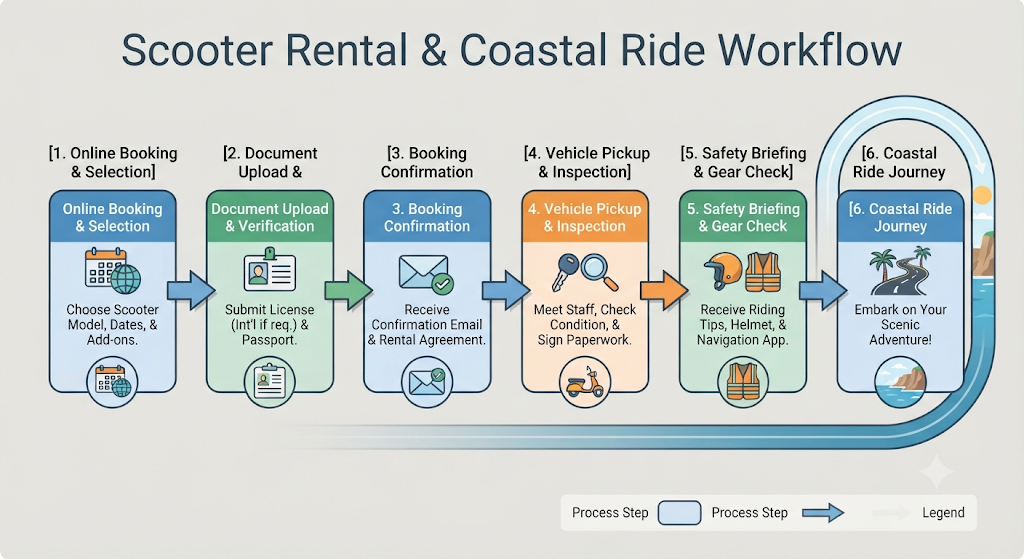
Evaluating listings requires looking past advertised daily rates to examine the full operational agreement. Renters should always review vehicle type specifications, rental start and end dates, total pricing breakdowns, pickup and return logistics, required identification documents, driver licensing eligibility, deposit structures, and cancellation terms. Reading the actual rental terms before making a payment prevents unpleasant misunderstandings upon arrival.
Plan for Safety and Legal Requirements
Safety and legal compliance must remain top priorities throughout your journey. Travelers must confirm local driving regulations, mandatory helmet laws, and any specific restrictions applying to foreign visitors. Choosing a vehicle that matches your actual driving or riding ability is crucial; visitors who lack confidence on two wheels should select a car or alternative public transport. Never attempt to operate a vehicle without the proper licensing credentials or safety gear.
How MotoShare.id Fits Into the Research Process
Researching transport options across scattered local vendors can be challenging and time-consuming. MotoShare.id functions as an Indonesia-focused marketplace for discovering rental vehicles and exploring transport options. By organizing diverse vehicle categories and location-based listings into a single digital platform, the marketplace helps travelers compare relevant vehicle categories and regional options before reviewing specific rental conditions.
A Simple Pre-Booking Checklist
- Confirm your destination and planned route topology: Understand whether you are tackling paved city streets, coastal highways, or unpaved mountain tracks.
- Estimate your passenger count and luggage volume requirements: Ensure everyone fits comfortably with adequate storage for all gear.
- Select a vehicle category that matches your actual skill level: Do not choose a high-displacement bike or complex vehicle without prior operating experience.
- Check home driving license and International Driving Permit requirements: Ensure your credentials satisfy local legal mandates.
- Compare total rental costs, deposits, and stated terms: Look out for hidden surcharges or strict bond rules.
- Verify pickup, return, and cancellation details: Know exact handover times, locations, and policy penalties.
- Review safety requirements and gear provisions before traveling: Verify that certified helmets and vehicle safety checks are fully accounted for.
Conclusion
Choosing transport based on route topology, riding experience, passenger needs, and verified rental terms makes trip planning far more practical. By matching your vehicle to your actual itinerary rather than relying on guesswork, you ensure a smoother travel experience. Platforms like MotoShare.id serve as useful resources for researching vehicle options and exploring local providers across Bali, Jakarta, Lombok, and beyond.
Leave a Reply